

Nurturing our Muskoka sugar maple forests with firewood ashes
By Norman Yan | Saturday, February 7, 2026
Muskoka’s sugar-maple dominated forests could use some nurturing.
There was a time when these forests nurtured themselves, staying healthy and vigorous for centuries. I’m amazed by this. After all, Muskoka soils are typically thin and nutrient-poor, so how did such soils sustain healthy trees for centuries?
About 95 per cent of a tree’s mass is made of carbon, oxygen and hydrogen, and all plants get these essential elements from the air and water. These are not the problem. The issue is the so-called “limiting nutrients” and these come from the soil.
A limiting nutrient (the nutrient in shortest supply relative to need) determines health and growth. It doesn’t matter if other nutrients are abundant — the limiting nutrient is the “weakest link.”
In our forests, calcium (Ca) is now usually the limiting nutrient. Calcium forms only about 0.5 to 2 per cent of the mass of a sugar maple, but it is essential, having both structural and functional roles. The strength of wood is reduced by 30 to 50 per cent when trees grow without adequate calcium. How might this affect ice storm damage? Adequate calcium supply is also needed for regulation of transpiration, wound repair, carbon capture, photosynthesis, sugar production and other physiological functions. Insufficient calcium leads to “ecological osteoporosis,” an analogue to the osteoporosis that affects many older people.
But why is calcium now limiting in ways it was not in the past?
Mature sugar maples lose hundreds of kilograms of shed leaves every autumn. While trees resorb much of the nitrogen, phosphorus and potassium (the N, P and K in our garden fertilizer) before leaf fall, storing these key nutrients for the following spring, they don’t resorb the calcium. About one-third of the trees’ annual sugar production is exuded from their roots into the soil, and that fuels a furious recycling ecosystem of invertebrates, microbes and fungi that break the shed leaves down, allowing the calcium to be resorbed by the tree roots.
But we have broken that efficient self-nurturing feedback in two ways — industrial logging and acid rain. Logging removes tree mass from the watershed, taking nutrients away so there is less to recycle. And a half century of acid rain has leached roughly half a tonne of calcium per hectare from our forest soils. The result? Ecological osteoporosis.
Time to nurture our forests, to become gardeners of our forests. We must restore the lost calcium.
Friends of the Muskoka Watershed (FOTMW), a Muskoka-based charity, has a plan. FOTMW works with Muskoka residents to resolve this issue using ashes from their fireplaces and woodstoves. Firewood ashes are 25 to 30 per cent calcium, and FOTMW and Trent University have shown that adding a 750-gram yogurt container of ash per square metre restores foliar nutrition with no negative effects. The benefits of adding a lacking nutrient should be no surprise to any vegetable gardener. Adding the limiting nutrient works as well with sugar maple as it does with sugar peas.
So what’s the plan? For the last few years, hundreds of Muskoka residents have been bringing their firewood ash to FOTMW’s monthly ash drives at the Rosewarne Transfer Station. Volunteers have screened that ash and then spread it in test plots to prove its benefits and look for any harm (we found none).
Now, FOTMW is moving from applied research on tree health to bigger questions. Might restoring tree health increase carbon capture, reduce the damage from future ice storms and perhaps reduce the severity of spring floods? After all, the wood should be stronger and the trees should pump more water if they are no longer calcium-limited.
It’s also time to work more broadly with the community and local governments to restore forest health, starting with forests on the thinnest soils, in areas that suffered most from calcium decline. By restoring forest health, we will regain the services in water retention and CO2 capture that our forests used to do so well.
This article was first published by MuskokaRegion.com.
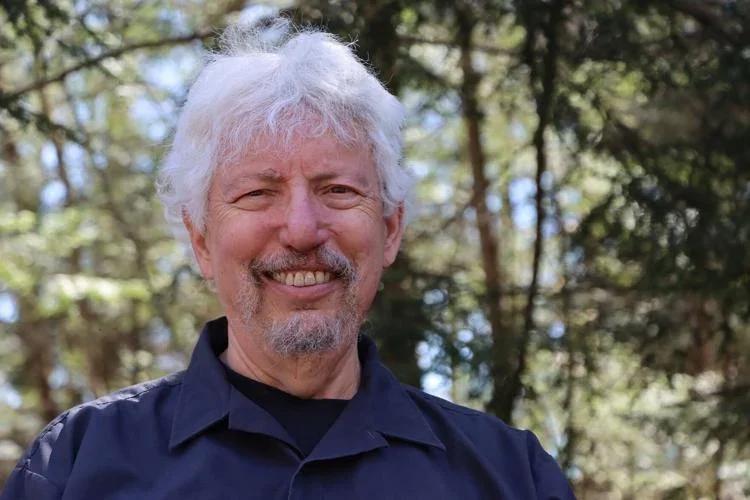
Norman Yan
This is article No. 6 in the current series, Nurturing Our Watersheds, from Muskoka Watershed Council. Its author is Norman Yan, an environmental scientist, a good friend to Muskoka Watershed Council, and a leader of FOTMW. The series is edited by Peter Sale.