

Is Muskoka’s future the one you want?
By Geoff Ross | Saturday, February 21st, 2026
I was a very young city kid when I first started exploring Algonquin Park by canoe. I was overwhelmed by the natural beauty of the park, and still am.
My first experience of Muskoka was as a university student escaping the city on weekends to help a friend build a cottage on his parents’ property. I would wake at dawn to steal away alone in a canoe to paddle relatively untouched natural shorelines. It was not Algonquin, but it was close enough to restore my soul.
Fifty years later, I revisited those same shorelines and was shocked by the change. The natural shoreline had almost disappeared, replaced by an endless lineup of huge boathouses. These likely represented other people like me looking to live, or at least vacation, in the wonderful natural beauty of Muskoka. But there was nothing left that was in the least bit restorative for me.
So the question becomes, how do large numbers of people get to benefit from the restorative properties of Muskoka’s natural spaces, without destroying what brought them here in the first place? This same question continues to be asked and answered with varying degrees of success around the world.
My wife and I have travelled to regions where severe restrictions have been placed on development in order to protect the natural environment upon which a tourism-based economy depends. The Lake District in England, and much of New Zealand, are among many examples. We would revisit such places in a heartbeat. Other places have allowed so much tourism-based development to occur that it has displaced much of the natural beauty that once existed. I won’t name these, but I’m sure you have seen such places for yourself. We have little interest in revisiting these. I am writing here from my own perspective as a tourist. But we know that citizens of such regions have been protesting against the negative impacts of tourism development on their own communities. If the quality of Muskoka as a tourist destination is degraded, we are all impacted.
If we want Muskoka to continue as a place where the natural environment IS the economy, it is important to acknowledge the policies of the last 100 years have been inadequate to prevent environmental degradation. The results of science-based monitoring reveal a number of concerning trends in environmental health. These have been covered elsewhere in this series of articles. Why is this happening?
Some trends, such as the increasing salt content of lakes, are almost certainly a result of human development. The causes for other changes may be less clear. Are they a result of development, climate change, invasive species, something else, or some combination of such factors? Climate change is beyond our capacity to repair at the local level, and we are limited in dealing with the unknowns until we better understand them. But better managing human development and its impacts is something we can, and must, be working on starting now. As the impacts of climate change increase, as they surely will, it will become increasingly important that our approach to development is appropriate to the changed world we will inhabit.
Past and future articles in this series propose Integrated Watershed Management as the appropriate kind of improved management needed. Inevitably, whatever new kind of environmental management is adopted, there will be difficult decisions required on the type and amount of development that is permitted.
If we want the future of Muskoka to be one where our environment continues to meet our economic and personal needs, we must have a collective “footprint” that is greatly reduced from past practices. While footprint reduction is happening at the government level, we can all make choices relating to our properties, homes, vehicles, purchases and lifestyles that reduce our individual “footprints.”
I am reminded of Joni Mitchell’s now-famous song lyric: “you don’t know what you’ve got ‘til it’s gone.” Let’s change our development behaviour before the Muskoka we all love and depend on is gone.
This article was first published by MuskokaRegion.com.
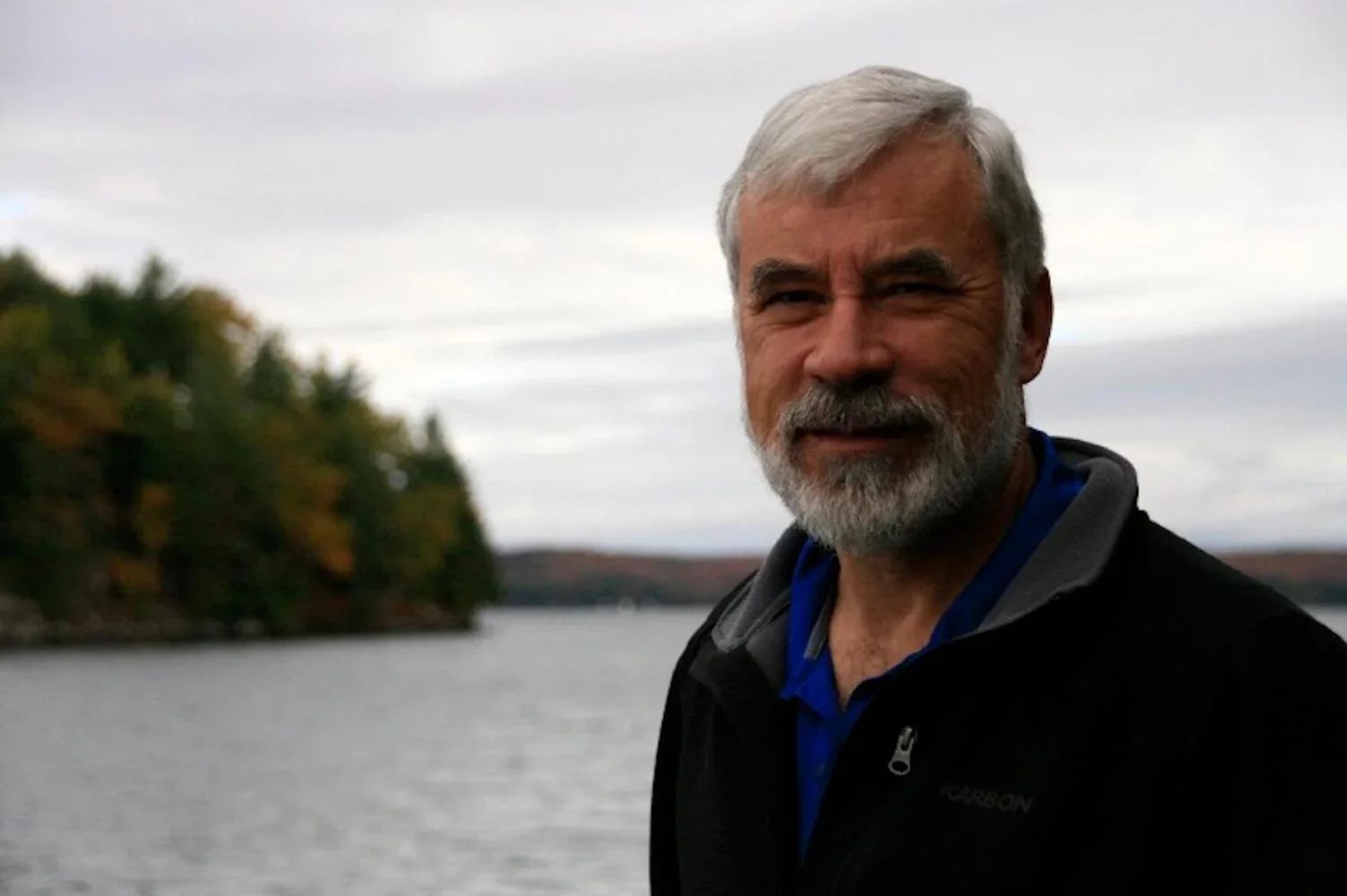
Geoff Ross
This is article No. 8 in the current series, Nurturing Our Watersheds, from Muskoka Watershed Council (MWC). Its author is Geoff Ross, a member and former chair of MWC, whose love affair with Muskoka continues. The series is edited by Peter Sale.