

Knowledge can nurture our Muskoka River Watershed
By Norman Yan | July 18th 2026
On July 4, I gave a presentation at the Leonard Lake Stakeholders Association’s annual general meeting on the state of and threats to Canadian lakes.
I consider the content of the talk to be remarkable in one regard — most of the information I shared came from data collected and summarized here in Muskoka.
I used data gathered by District Municipality of Muskoka’s Water Quality Monitoring Program from hundreds of Muskoka lakes, and time-series data from the Dorset Environmental Science Centre’s (DESC) half century of monitoring of their eight main study lakes.
Compared to any other region in Canada, Muskoka has among the best, if not the best, information on the state of our lakes. Why? Because we have understood how important healthy lakes are to our economy and have acted accordingly to document the state of and threats to that health.
So, using this local information in my talk, I was able to report the rain is now 30 times less acidic than it was in the 1970s, and that phosphorus levels have been reduced across the watershed and have been stable for the last 20 years — both good news stories.
But there was also some not-so-good news in the Muskoka data. The duration of winter ice cover in our lakes has fallen by almost a month, and there are more hot days in the summer, warmer autumns, and fewer freezing days in the winter.
Calcium levels have fallen in our watersheds, reaching levels that threaten aquatic life in about half of our lakes, and also threaten sugar maple health in our forests. Road salt levels have risen in about 20 per cent of our lakes to the point where aquatic life is also threatened.
And despite stable phosphorus levels, algal blooms are on the rise, often in lakes that have never experienced them in the past. We don’t fully understand the reasons for the increasing frequency of blooms, but climate change is almost certainly involved. And then there are spring floods and summer droughts, invading species, hundreds of chemical pollutants, microplastics and less clear waters.
What does all this have to do with nurturing our watershed?
In his 1668 classic, “Leviathan,” Thomas Hobbes noted that “knowledge is power.”
We have better knowledge of the threats to, and changes in, the state of our watershed than almost any other region of the country. We also have the knowledge about why many of these changes have occurred. We understand the causes of calcium decline and road salt pollution and climate change.
Through the work of various local ENGOs — eg. Friends of the Muskoka Watershed, Muskoka Watershed Council, Climate Action Muskoka — and supported by the Muskoka Discovery Centre — the knowledge we have is being communicated to seasonal and full-time residents, and to local policy makers.
We also understand the links between the health of our watershed and our long-term ecological and economic fortunes, and local politicians certainly share that understanding.
My question is: will the knowledge we have empower us to nurture our watershed, to act on our knowledge of the threats to our watershed, and take the steps needed to resolve those threats?
We can certainly act on the threats that have regional or local causes, like calcium decline and road salt pollution if we choose to.
It took three things to solve the historical acid rain problem in Muskoka — understanding the scale, severity and, critically, the cause of the problem, generating the public will to act on that understanding, and fostering the political willingness to respond to public pressure.
In his 1972 book “Steps to an Ecology of Mind” Gregory Bateson noted that “information is a difference that makes a difference.”
There are ongoing changes occurring in Muskoka’s environment. We have knowledge of undesirable differences. But will that difference make a difference? That’s up to us to decide.
This article was first published by MuskokaRegion.com.
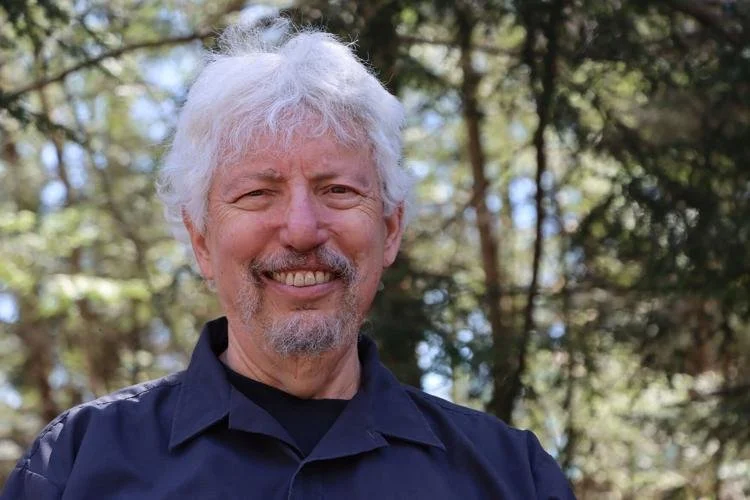
Norman Yan
This is article No. 29 in the series, Nurturing Our Watersheds, from Muskoka Watershed Council. Its author is Dr. Norman Yan, founding chair of Friends of the Muskoka Watershed, good friend of Muskoka Watershed Council, and an aquatic ecologist with deep roots in Muskoka. The series is edited by Peter Sale.