

Valuing our trees: How Muskoka forests hold the key to easing floods and fires
By Patricia Arney | July 11th 2026
CBC reported recently that Terrasse-Vaudreuil, a town of 2,000, west of Montreal, is the first in Canada to recognize trees as living beings with “the right to life, to natural growth, to integrity and to regeneration,” according to a translation of the resolution. Why? Because after being flooded three times, people there understand something many cities forget: our biggest ally against climate change is the trees.
On the other hand, Muskoka has long had a love-hate relationship with trees. Early settlers cleared them for logging or farming, cottagers to better see the lake. Those left standing were valued for their shade or tree house potential unless they got in the way of our plans for our property.
We should value them even more because research has shown that trees and forests can play an integral role in mitigating floods and likely also wildfires — two major threats.
As Norman Yan wrote recently, clear-cutting has many negative consequences — increased erosion, worsening spring floods, reduced carbon capture and damage to forest life.
The hydrological model developed for the Muskoka River watershed in 2023 confirmed that forests are an important part of flow mitigation and that deforestation or wildfires will result in increased peak flows. And a recent article out of UBC confirms the importance of forests in easing floods more generally.
Forests’ role in wildfire mitigation is less clear. Intact forests conserve moisture both in the soil and in the atmosphere, and their shading lowers air temperatures. Old growth forests are widely recognized as resistant to wildfire. But there is less clarity on how best to manage forests to resist fire, particularly in the “wildland-urban interface” that Muskoka personifies.
A 2023 article from Nature United describes the different types of forests across Canada, with different responses to fire and to various types of fire prevention activities. It highlights the need for further study of different management approaches because how forested land is managed does a lot for how it responds to wildfire. And climate change is changing the rules.
Muskoka has extensive forests, and we should not remain complacent in the old assumption that the many lakes in Muskoka are natural barriers to extreme wildfire. That is likely no longer correct. Climate change is creating fires of formerly unimaginable severity while also changing forests in many other ways.
Many seem to be promoting FireSmart as the answer for Muskoka, but we should not be embracing programs like FireSmart without question. FireSmart provides guidance that can protect property, but at the cost of forests.
Will the insurance industry soon make our cottages and homes more difficult to insure if we do not maintain extensive lawns around them? In 2026, the first fire ban because of serious fire danger within and around Muskoka occurred in early June.
Although claiming its advice is based on the best available science, FireSmart’s website and materials give little sign that more needs to be learned and the focus is exclusively on how to reduce risk of property damage or worse in the event of a fire.
Adopting FireSmart will open up the landscape around our homes — a good thing in some circumstances — but with unforeseen consequences for other forest services, such as flood mitigation.
We need research into fire behaviour in forests typical of Muskoka and in our new warmer climate. And we need to integrate that research into our broader understanding of the roles of forest in our watershed.
Mounting evidence of the value of forests in mitigating hazards like floods and perhaps fires suggests it would be prudent for Muskoka to take significant steps to protect this asset — and to undertake new research on best integrated management practices for lands in our region, including for reducing risk of fires.
That will require a collaborative effort, public and political will, and recognition that in a watershed all problems and all solutions are connected
This article was first published by MuskokaRegion.com.
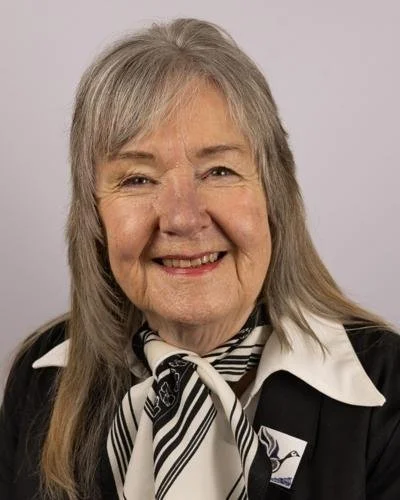
Patricia Arney
This is article No. 28 in the current series, Nurturing Our Watersheds, from Muskoka Watershed Council. Its author is Patricia Arney, a former, long-term member of Muskoka Watershed Council, and someone who did a lot for the environment over her many years as a Muskoka resident. The series is edited by Peter Sale.