

Unknown environmental risks and the Muskoka River Watershed
By Peter Sale | September 12th 2026
Nurturing a watershed is a task made easier if we can anticipate problems and be prepared before they happen. For example, with detailed projections of likely future flooding as climate changes, we could plan effective strategies to ameliorate more extreme floods.
If we try to build a list of possible future risks facing our watershed, we quickly run into a problem. By their nature, risks are often not recognized until after they occur. They creep up on us unawares. Also, while some risks are dealt with relatively easily, others may be beyond our ability to rectify or even ameliorate. Risks that are both unanticipated and difficult to deal with are the dreaded unknown unknowns — we did not expect them, and we don’t know what to do. One goal of effective environmental management is to minimize these unknown unknowns.
The old maxim that a tree which falls in a forest makes no sound if nobody is there to hear it has some relevance here — the tree still fell, even if we did not notice! While I don’t imagine an epidemic of falling trees, some problems will appear suddenly if we do not begin more effective tracking of environmental conditions.
Muskoka Watershed Council’s (MWC) 2023 Watershed Report Card relied upon data collected by citizen groups and governmental regulatory bodies. MWC cannot assess data that does not exist! Careful reading of the 2023 edition identifies some clear gaps.
For example, it is very likely that climate change will alter the status of many wetlands. These provide several important environmental services, so if they are altered there could be broad consequences.
I know of no current monitoring of wetland performance across Muskoka. We should start. Otherwise, we won’t notice wetlands drying up and will naively assume all is well until water quality, water flow, or the filtering out of pollutants degrade sufficiently that our lakes and rivers become far less attractive and healthy than they are. The good news is that District of Muskoka recently completed detailed mapping of wetlands. With this baseline, a monitoring program could begin that looks at performance every five years or so, to identify long-term detrimental changes.
We also know far less about our forests than we do about the lakes, yet forest health is vitally important to the way in which water passes through the watershed, and the extent to which the watershed captures carbon, removing it from the atmosphere. Knowledge about populations of most animal species is also sparse, even for those classified as at risk. We know which species at risk occur in Muskoka, but little beyond that. Dr. Norman Yan recently told me that small collections he made of zooplankton in Lake Rosseau contained little beyond the invasive spiny water flea, Bythotrephes, and Holopedium, a Daphnia relative that wears a protective gelatinous mantle. This signals a radical alteration in the food web of this lake. Is that important? We don’t know, but maybe we should find out.
Perhaps our largest current omission is any assessment of the potential impacts of using waterfront land. Municipalities have stringent requirements for developing waterfront lots. Building projects are monitored carefully for compliance, but once the project is finished and the owners move in, monitoring ceases. Maybe that is as it should be, but we all know that modification of waterfront property continues long after construction has finished. Do the modest “improvements” — the stone paths and patios, the lawns, the fertilizer and pesticides, and the general “tidying up” of the foreshore — have deleterious impacts on the lake? We cannot know if we are not monitoring.
We must become better at discovering environmental risks before they are too severe for us to remediate. A watershed management plan helps us identify and then respond to gaps in information about our shared home. Consider helping Muskoka Watershed Council as we work to build a plan for the Muskoka River watershed.
This article was first published by MuskokaRegion.com.
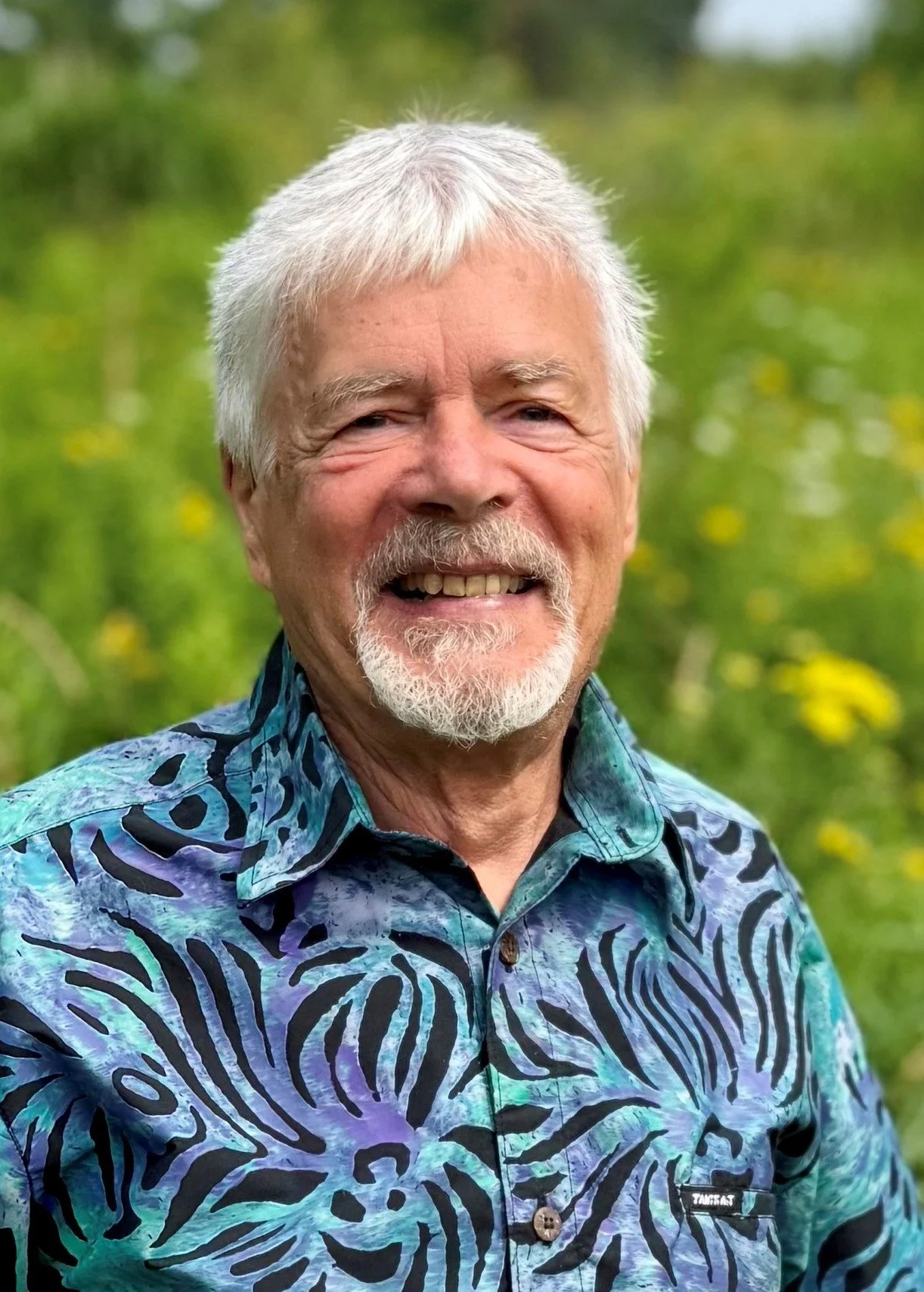
Peter Sale
This is article No. 36 in the current series, Nurturing Our Watersheds, from Muskoka Watershed Council. Its author is Peter Sale, aquatic ecologist, and a director and former Chair of Muskoka Watershed Council. Peter also edits the series.