

Scum on the water: Inside the Ontario policy handling Muskoka lake algae blooms
By Peter Sale | May 30th 2026
It’s no fun being part of government. Bureaucrats do their best with the mandates handed down by politicians. The rest of us expect government to keep out of our way, except when we want it to do something for us — prevent a flood, provide free health care, educate our children. And to cost next to nothing.
Algal blooms are uncommon, unpleasant, and very occasionally toxic. The algae, always present and absolutely vital as the bottom rung on a lake’s food chain, sometimes enjoy a run of great conditions for growth. Their populations explode, creating a visible discoloration or scum on the water. These blooms may persist for a few days to several months, can occupy a sheltered bay or the entire lake, and can cause fish kills when the algae decay and use up the oxygen dissolved in the water. On rare occasions they release toxins that can be a serious health concern.
Evidence over recent years confirms that algal blooms are becoming more common in cottage country. For communities whose economy depends upon the quality of our natural environment, algal blooms are an environmental event that demands action. Scientists do not yet understand why blooms are becoming more common. And no silver bullet exists to remove or prevent blooms. The only real solution is to wait patiently for it to dissipate on its own.
You’d think governments would be working feverishly to determine the causes of blooms and seek remedies. But rather than targeted scientific investigations, we find government mostly hiding its collective head in the sand.
What happens when a bloom occurs on a Muskoka lake? The Ministry of Environment, Conservation and Parks (MECP), responsible for water quality, maintains a hotline — a phone number to call to report a suspected bloom. When Joe Citizen calls, MECP staff visit the site, make observations and take water samples. So far, so good.
The samples are analyzed to determine whether algae are present, and if so, which species are dominant. MECP then commences sensitive toxicity testing.
Following preliminary evaluation, MECP notifies the Simcoe Muskoka District Health Unit (SMDHU), a branch of the health ministry responsible for warning the public concerning health risks in the environment. SMDHU posts a public notice that a bloom has occurred, and that it might be toxic. Receipt from MECP of the detailed toxicological results follows later. So far, still OK, although several days likely elapse as these steps are taken.
What happens next. Well, mostly nothing. Government goes back into head-in-the-sand, butt-covering mode. Followup monitoring seldom happens. And the notice declaring the occurrence of the bloom remains active until sometime mid-winter when SMDHU decides the danger has likely passed.
Not very good at all.
This process fails to discriminate between minor localized blooms lasting a few days and blooms encompassing entire lakes for months. Nor does it discriminate between the great majority of blooms showing no detectable toxicity and the few that are measurably toxic. Nor does it track the performance of the bloom from discovery to ultimate dissolution.
This feeble effort to document what is happening breeds lack of faith in government by the community, while doing nothing to allay the anxiety of individuals concerned about toxicity risk. And the posted warning remains long after the bloom has gone.
How could government do better? It could streamline the steps between initial hotline phone call and the declaration of a bloom by SMDHU. It could routinely resample every week to determine when the bloom has dissipated. It could mandate more scientific research. In other words, government could treat algal blooms as an environmental concern that is becoming more frequent, has economic and societal costs, and requires efforts to develop policy designed to remedy them. Is that asking too much?
This article was first published by MuskokaRegion.com.
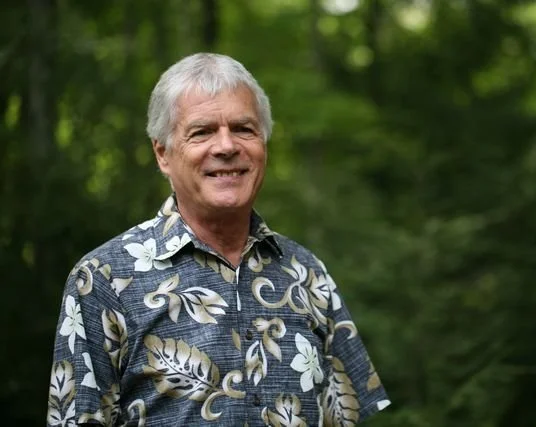
Peter Sale
This is article No. 22 in the current series, Nurturing Our Watersheds, from Muskoka Watershed Council. Its author is Peter Sale, aquatic ecologist, Muskoka resident, and director and former chair of Muskoka Watershed Council. Peter also edits the series.