

Living with Muskoka floods: Can floating structures save homeowners millions in damages?
By Neil Hutchinson | May 9th, 2026
In recent years, Muskoka residents have seen the phenomenon of the “100-year flood” become almost common. Anxiety about the freshet ramps up routinely in late March as we watch the forecast and the climbing water levels.
We now understand that spring flooding in Muskoka occurs when a heavy snowpack, rapid melting and heavy rain combine over a short period. Temporary vernal pools and headwater tributaries in our forests and wetlands provide some storage of water, and healthy forests will transpire some moisture into the atmosphere. The preservation of these features can therefore help to mitigate flooding. But when melt and rain exceed storage capacity, we get floods — water spills over the shorelines and submerges roads, houses, docks and boathouses.
The costs of these add up in the form of damages to properties and structures, rising insurance costs, modifications to hydrologic structures to mitigate flooding impacts and even lawsuits against management agencies. These can add up to hundreds of millions of dollars. While some insurance policies will cover flood damages, many firms might conclude that it is bad business to continue insuring risky properties, or insurance costs may become prohibitive.
In 2020, the Province of Ontario, through the District of Muskoka and the Muskoka Watershed Advisory Group (MWAG), funded a study by Hatch Engineering, which identified 10 infrastructure projects that would cost over $190 million to construct. If all of them had been implemented, they would have lessened, but not eliminated, the risk of flooding in spring of 2019. They would provide even less protection if flooding became more severe in the future. So, what other actions can we take to decrease risk and manage flooding?
Given that structural mitigation will not prevent flood damage, and noting the lack of concrete progress in addressing climate change, we are certain to experience more, and more severe, flooding in Muskoka’s future. Our efforts should recognize our place in the ecosystem — and focus on living with the inevitable flooding while adapting to changeable water levels.
What could we do? Coastal communities have adapted to water levels that fluctuate by several metres twice a day through floating structures such as docks, boathouses and even houses. A quick Google search reveals companies that have built floating boathouses, some quite large and with second-story living accommodation, in Muskoka. Floating homes are a fixture at Granville Island, Vancouver, where tides range over eight metres twice daily. If a flood ruins a fixed-in-place boathouse, why couldn’t it be replaced by a structure that would simply rise and fall with the freshet? “What about winter?” some may ask. The City of Yellowknife includes several dozen houses floating in Yellowknife Bay that are safely occupied year-round. Water levels in Great Slave Lake vary by 20 to 40 centimetres annually and ice is up to 1.5 metres thick. So fluctuating water levels and winter ice can be accommodated.
We recognize that the flood plain is a risky area in which to build, yet people have built there since Muskoka was settled. As our flooding risk increases, would it not make sense to purchase flood plain properties as public parkland in which flood waters could be temporarily stored with no harm to people or structures? Proximity to water makes floodplains popular areas for recreational facilities and these can be designed to accommodate temporary flooding — is this a consideration for the future uses of the Rona lands on the North Muskoka River in Bracebridge?
Since we cannot prevent them, flood adaptation should be part of flood management in Muskoka. The preservation of natural features that reduce flooding risk, the conversion of floodplain areas to uses not impaired by flooding and “flood-smart” shoreline structures such as docks and boathouses that float on changing water levels are all part of flood planning. Our activities should recognize the natural cycles and work with the water in the watershed rather than try to change the water flow to meet our needs.
This article was first published by MuskokaRegion.com.
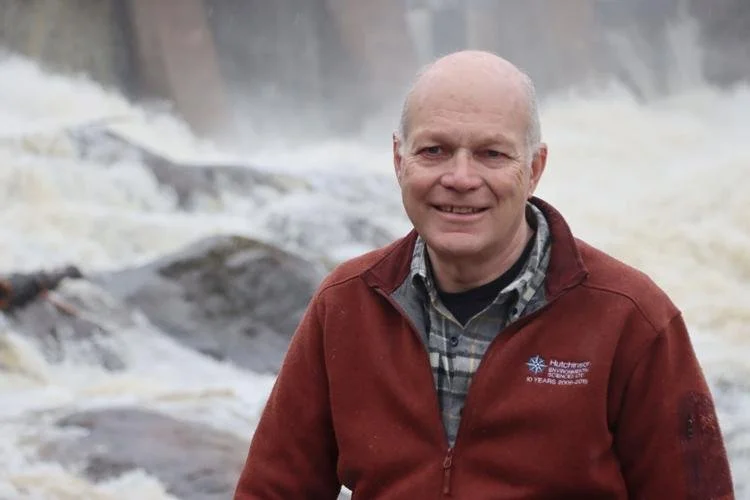
Neil Hutchinson
This is article No. 19 in the current series, Nurturing Our Watersheds, from the Muskoka Watershed Council. Its author is Dr. Neil Hutchinson, a retired aquatic scientist, Bracebridge resident, member of Muskoka Watershed Council and director of Friends of the Muskoka Watershed. The series is edited by Peter Sale.