

Tipping points in our environmental stewardship: Muskoka Watershed Council
By Peter Sale | April 25th, 2026
With Earth Day just behind us I am thinking about environmental tipping points. More specifically, I am thinking about good tipping points, ones that could help us as we seek to nurture our watersheds through the challenges of coming years. I’ve been inspired by reading Suzanne Simard’s new book, “When the Forest Breathes,” the sequel to her award-winning first book, “Finding the Mother Tree.”
A forest ecologist at the University of British Columbia, Simard studies relationships among the trees and the various microorganisms with which they share the forest. Her studies of the intricate fungal networks that connect the roots of neighbouring trees within the forest floor, and transfer nutrients and other chemicals through this network, have led her to view the forest as an interconnected, communicating society. She has shown the importance of mature, old growth trees to this system, and her experiments reveal the enormous damage modern mechanized clear-cutting does. Recovery of clear-cut sites is severely slowed compared to more selective harvesting.
Her rural upbringing, her work within the forest industry, and her close relationships with Indigenous communities, inspire Simard to think holistically about forests, in much the same way Muskoka Watershed Council encourages us all to think holistically about our watersheds. Everything is connected to everything and everyone else.
I am not concerned here with the details of Dr. Simard’s teachings. Rather, I am intrigued by the way her work, and that of a small group of other forest ecologists, seems to be overturning conventional, long-held views on how forests endure, how they are propagated and how they respond to harvesting. I think we are at a critical moment in forest ecology — approaching a tipping point in how scientists approach the trees. Dr. Simard’s work has been criticized and the forestry industry is definitely not a fan. But I think we will see our understanding of forests profoundly changed over the next several years.
We think of tipping points as those times when something that has been gradually trending worse suddenly plunges off the proverbial cliff. But as Malcolm Gladwell’s book, “The Tipping Point”, showed it’s also possible for something slowly trending for the better to accelerate suddenly to become much better. There may be good environmental tipping points in our future.
At present, whether thinking about Muskoka’s likely future climate or the global trend for greenhouse gases in our atmosphere, I struggle to be optimistic. Since the heady days of the Paris climate conference in 2015, and its goal of no more than 2°C and preferably closer to 1.5°C, the world has consistently fallen short on what it needs to do. Our emissions of greenhouse gases continue to climb, and the planet continues to warm.
The last 11 years have been the 11 warmest years on the planet and 2025 was only slightly cooler than 2024 (the warmest) and 2023 — two years influenced by a strong El Niño. By 2100, Bracebridge will likely be 8°C warmer than it is now, and 10°C warmer than in pre-industrial times — a profoundly different environment than now.
Yet as Hannah Ritchie’s “Clearing the Air”shows, the expansion of solar, wind and other renewable forms of energy has been far more rapid than anticipated, the costs of electricity generated by these sources have fallen precipitously, and the uptake of electric cars and heat pumps is proving far faster than expected.
We seem to be approaching another positive tipping point.
For whatever reason, humanity is embracing these new technologies, enthusiasm and adoption are rapidly growing. Which means that the worst climate predictions may not come to pass — not because the science was wrong (it is not) but because our thinking and our preferences have tipped. Now if people can follow Simard, changing their views on how they relate to the natural world, we have a fighting chance of keeping the Muskoka region a wonderful place to live.
This article was first published by MuskokaRegion.com.
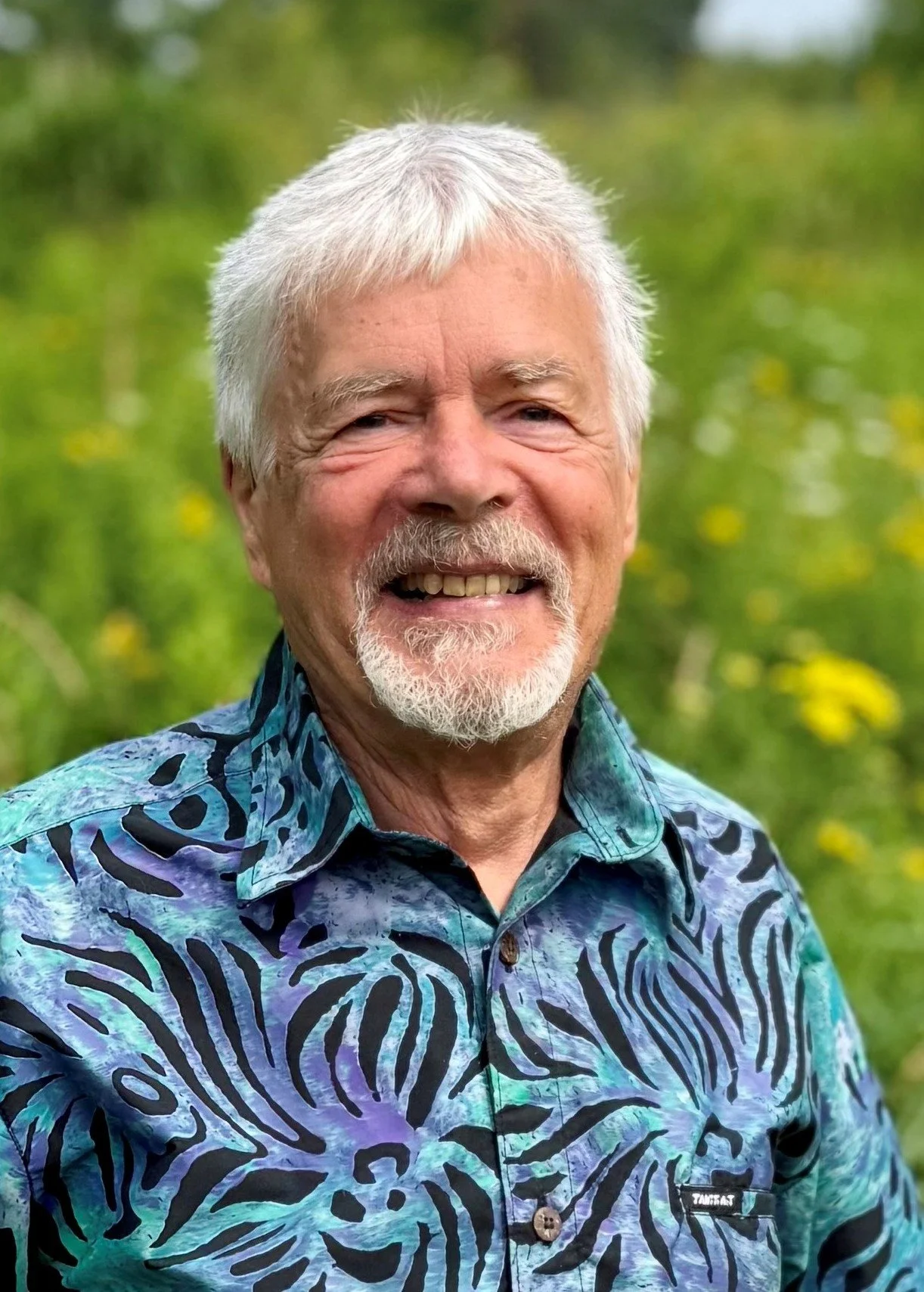
Peter Sale
This is article No. 17 in the current series, Nurturing Our Watersheds, from Muskoka Watershed Council. Its author and editor of the series is Peter Sale, marine ecologist, Muskoka resident, and director and a former chair of Muskoka Watershed Council.