

From flooding to water quality: What’s next for the Muskoka River Watershed?
By Kevin Trimble | April 18th, 2026
Muskoka Watershed Council (MWC) will host a fireside chat on April 29 at the Canadian Raceboat Hall of Fame. Free to the public, the informal discussion will focus on the risks to our watersheds, what’s been done and what needs to happen next.
In preparing to talk with residents, I’m reminded of the evolution of our thinking on how to live as part of a watershed ecosystem. Around 2016, a long-standing MWC member suggested we should think about watershed management and a watershed plan for the Muskoka River Watershed. A relatively new member myself at the time, it struck me as odd that no one in our region had thought about that when this concept had become so common elsewhere in Ontario and across North America.
True, environmental groups, local governments and even some businesses were doing their bit with many different environmental initiatives, but no one was looking at how our whole watershed ecosystem works or how we can live here without degrading it. Granted, there is no overarching agency with jurisdiction over the Muskoka River Watershed (or the neighbouring ones), and the current Muskoka River Water Management Plan doesn’t address flooding, water quality or terrestrial ecosystem features.
Maybe ecosystem thinking should not be expected — nobody had been tasked with that job! Unfortunately, while we currently do our best to consider the environment and climate change, we usually only minimize negative impacts and we don’t fully understand how our actions affect the functions of this complex biophysical system as a whole.
In late 2017, MWC assembled a group to discuss how water moves through our headwaters, forests, wetlands and built communities — otherwise known as eco-hydrology. Then the flood of 2019 happened. Four members of MWC were selected for a Minister’s Watershed Advisory Group (MWAG) that ultimately made recommendations for provincially funded projects. Watershed management and flooding emerged as top priorities and acting on MWAG recommendations, the Minister of Environment, Conservation and Parks funded 16 projects with a $5M fund, of which the District of Muskoka carried out 12.
Since that time MWC has dedicated itself to generating knowledge and interest in ecosystem-scale stewardship of the watershed ecosystem by making presentations, delegating to municipal councils, convening workshops and conferences and writing articles like this one. In 2020, MWC prepared a white paper on Integrated Watershed Management (IWM), a formal framework guiding watershed-scale management. This was followed by a case study of governance models in 2022.
Our conference held for municipalities in early 2024 generated so much interest that a second conference later that year was hosted by several local municipalities, leading eventually to the District of Muskoka creating a municipal working group comprised of senior staff from across the watershed.
MWC is now proposing a path forward and seeking non-government partners to collaborate with municipalities in management enabling living more sustainably in our watershed ecosystem. Most recently, this has included a meeting of major watershed environmental organizations co-hosted with our partner, the Muskoka Discovery Centre.
Artemis II astronaut Christina Koch in her return speech said, “ … a crew has the same cares and the same needs, and a crew is inescapably, beautifully, dutifully linked.” She then said that when Earth came back into view from behind the moon on their way home, she was struck not so much by the tiny blue planet in the distance, but by the expanse of blackness around it, making it look like a little lifeboat. And she said, “Planet Earth, you are a crew.”
Alone, we can’t fix a planet, but we who share the resources and benefits of our watershed are all “dutifully linked” by a responsibility to ensure the condition of our lifeboat is maintained or improved with every local decision we make, as business owners, property owners and ratepayers. Ecology is not rocket science — it’s more complicated than that. And we need to chat, starting perhaps on April 29 for some, about the environmental costs we may be ignoring, and the potential benefits of thinking about the whole system.
This article was first published by MuskokaRegion.com.
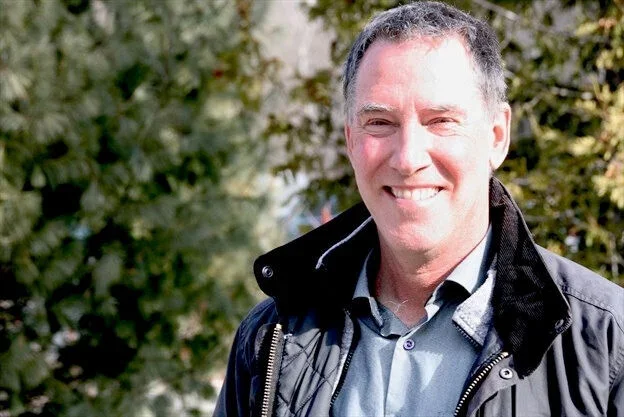
Kevin Trimble
This is article No. 16 in the current series, Nurturing Our Watersheds, from Muskoka Watershed Council. Its author is Kevin Trimble, former chair and currently a director of the Muskoka Watershed Council, a Muskoka resident, and a retired environmental consultant. The series is edited by Peter Sale.