

By Norman Yan | November 7th 2026
In a recent article, I argued that only knowledge and will are needed to nurture our environment. Noting that “will” was the harder component to generate, I devoted much of that article to how the will to action could be fostered. What about the knowledge component? How should we pursue its generation?
One option is to leave it to the “experts”. But no less a luminary than Jane Jacobs thought the widespread declining trust in experts was a logical consequence of their repeated failures, their acceptance of dogma over local experience and, in extreme cases, their corruption. But her conclusions about the unreliability of expertise emerged from her decades of painful interactions with urban planning professionals who refused to see cities as dynamic ever-evolving ecosystems, where the application of highly specialized, ivory-tower theory often led to flawed policy.
Like cities, natural environments are ever-changing ecosystems. Every place on the ground and every moment in time is, to some extent, unique. This means that understanding nature (generating the knowledge to nurture it) is not rocket science, a discipline where only technical expertise is needed. Rockets do work. Living ecosystems work too, but what regulates their details is uncertain, and nigh impossible to model, so predicting consequences of actions is uncertain too. Designing effective management is challenging.
This doesn’t mean we don’t need trained environmental scientists though. We just don’t need unhumble ones committed to accepted dogma. After all arrogance closes the mind to listening, observing and testing ideas – all part of gaining knowledge.
Fortunately, the public still largely trusts scientists. The 2026 IPSOS Global Trustworthiness Index is based on surveying over 20,000 adults in 31 countries. Doctors, scientists and teachers were ranked as the most trusted among 20+ professions, while the least trusted were social media influencers and politicians. I find this reassuring because it is largely populist politicians (of the left and right), social media influencers and science-skeptics telling us not to trust science.
So what should we expect from ecosystem scientists and managers who build the knowledge that underpins policies to manage Muskoka’s environment?
I’d tell them: “Listen to and learn from the Muskoka community to ensure the changes you are seeking to understand matter to residents. Because our world is changing, don’t skimp on spatial or temporal coverage as you track environmental patterns and trends. Don’t leave your data in digital filing cabinets. Examine data carefully, learn, and adjust policies - producing MWC’s report card regularly is a good first step.
Don’t confuse correlation with cause. Test hypothesized causes of change in ways that are locally appropriate. For example, ensure your results apply to soft, nutrient-poor waters, and to local biota. If appropriate, publish your results in the peer-reviewed literature to ensure their veracity, but also communicate them locally to get public feedback and foster the mobilization of the knowledge into action.”
How are we actually doing on local knowledge-generation? The District of Muskoka’s water quality monitoring program provides among Canada’s best recurring assessments of inorganic water chemistry, but we should never forget it includes only 10% of the lakes in the watershed, and there is a bias in lake selection. Assessment of long-term trends in lake physics, chemistry and biology in this region has recently been threatened by reductions in resources at the Dorset Environmental Science Centre. Further, our ability to test the causes of observed changes in Muskoka lakes may also be suffering from reduced engagement in this region by Canada’s limnological scholars. That is a worry. Correlation is not cause, and management actions based on correlations are inherently uncertain.
I’m a bit worried. At a time when our lakes are threatened by multiple stressors – development and land clearing, climate change, invading species, and dozens of novel air- and water-borne pollutants – we aren’t keeping up with tracking the status and trends of environmental conditions and identifying the causes and implications of these changes. We need this knowledge to nurture the environment that underpins us all.
A version of this article was first published by MuskokaRegion.com.
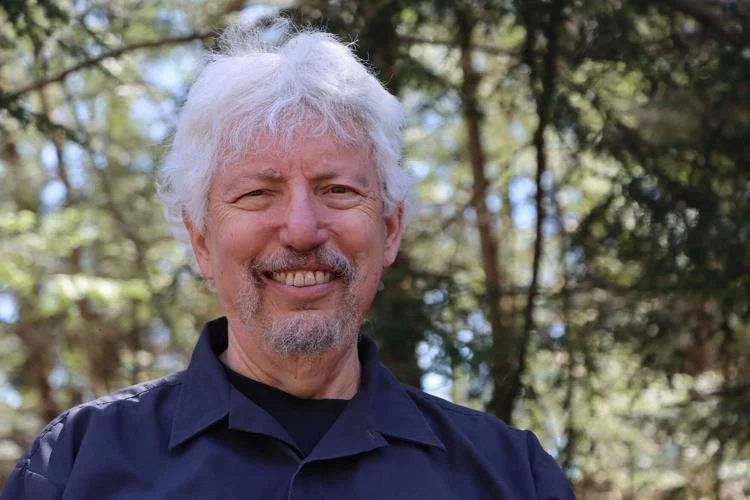
Norman Yan
This is article No. 44 in the current series, Nurturing Our Watersheds, from Muskoka Watershed Council. Its author is Norman Yan, founding chair and current director of Friends of the Muskoka Watershed, whose career as an aquatic biologist was centred on work in Muskoka’s lakes. Norman is also a good friend of Muskoka Watershed Council. The series is edited by Peter Sale.