

Where are we at with road salt in Muskoka?
By Dr. Neil Hutchinson | Saturday, March 14th, 2026
As winter (hopefully) draws to an end I thought it was useful to review the initiatives being taken by Friends of the Muskoka Watershed (FMW) and Muskoka Watershed Council (MWC) to draw awareness to the need to reduce our use of road salt to protect sensitive Muskoka.
The 2023 Watershed Report Card showed that of 274 lakes monitored by the District Municipality of Muskoka, 194 (71 per cent) had chloride concentrations that exceeded expected natural levels (more than one mg/L). Of these, 67 (24 per cent) had more than 10 mg/L and were considered potentially toxic. (In 36 of these lakes, concentrations exceeded 20 mg/L and negative effects on aquatic life were likely.) This salt pollution is ongoing because concentrations had increased by more than one mg/L in the past five years in 30 per cent of the lakes. The problem is clear and not limited to sensitive aquatic species: we have learned that road salt threatens birds, which ingest contaminated grit from the roadside, and it also corrodes costly infrastructure.
FMW’s “Salty Muskoka” project has engaged citizens, businesses and lake associations with the primary message that “you can reduce road salt use and still maintain safety.” FMW spread this message at 41 events since March 2025, engaged five schools, five lake associations, trained community scientists to measure road salt and visited 77 small businesses, providing practical advice on salt reductions. Public awareness and a willingness to help have increased among Muskoka citizens and their projects have been featured in local media, CBC’s “Ontario Morning” and TV Ontario’s “The Agenda.” Word is getting out!
Municipal governments in Muskoka and throughout the province are responding. In 2023, The Gull and Silver Lakes Association (GSLA) and FMW described the road salt threat to Gravenhurst council which then passed a motion committing to the reduction of the use of road salt as much as possible, while maintaining safety on roads and sidewalks.
In 2024, the Ontario Salt Pollution Coalition, with support from GSLA and FMW, presented to District of Muskoka council, which then adopted four resolutions to improve awareness. The resolutions included limiting the threat of liability to commercial operators from “slip and fall” lawsuits, encouraging the province to develop an expert committee to advise on how to reduce road salt usage, to reduce their own use of road salt as much as safely possible and report annual usage and to communicate these resolutions.
By the end of 2025, all six of Muskoka’s local area municipalities had adopted the resolutions or variants of them. We have learned that a total of 34 Ontario municipal councils have now pledged to reduce road salt. So grassroots efforts have spread awareness, not only to citizens, but to municipal governments. The Town of Bracebridge, for example, has installed a series of weather stations and cameras so that winter maintenance crews can see real time road conditions and adjust their practices accordingly.
One remaining local concern is parking lot and sidewalk maintenance in commercial areas. Egregious overuse of salt at local businesses, schools and offices is frequent. Business owners tell us they are sympathetic but that private contractors are hired for maintenance and live in fear of liability for “trip and fall” insurance claims. These are generally settled out of court for large sums, and often independently of the merits of the lawsuit. This concern can only be addressed by passing legislation to shield operators from liability if prescribed maintenance practices are followed.
Changing ingrained societal behaviour is a challenge and often proceeds slowly over time. But our local communities and NGOs have been leaders and we are starting to see the fruits of their positive activism. We can tackle local problems and improve our environment and we need to maintain that pressure. Next steps should find ways to work with the Province of Ontario to reduce their road salt usage and promote legislation and best practices to address the problem.
This article was first published by MuskokaRegion.com.
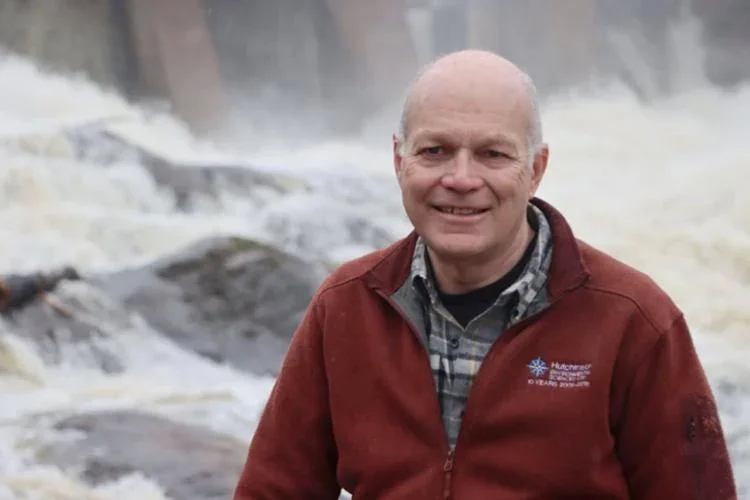
Dr. Neil Hutchinson
This is article No. 11 in the current series, Nurturing Our Watersheds, from Muskoka Watershed Council. Its author is Dr. Neil Hutchinson, a Bracebridge resident, retired environmental scientist, board member of Friends of the Muskoka Watershed and member of Muskoka Watershed Council. The series is edited by Peter Sale.