

A changing climate changes the rules for Muskoka’s environment
By Geoff Ross | October 9th 2026
Thanksgiving is a time to reflect on how fortunate we are to live in Muskoka. But, with climate changing, this is also not a time to be complacent. Among the many threats to the water quality so critical to Muskoka’s environment and economy, climate change is fundamental because it changes the rules for everything else.
Consider the algae naturally present in lakes. Algae are an essential part of the food web. They also produce much of the oxygen that we breathe. But they also sometimes become so numerous that they form “blooms” with thick, smelly green scum on the water surface of a lake and potentially releasing toxins to the water. Undesirable in the extreme.
Abundance of algae in a lake results from complex interactions of many factors — temperature, availability of nutrients such as phosphorus, activity of grazers, recent weather, and others. Until now, limiting phosphorus availability through regulation of detergents, septic systems, and runoff to lakes has proven effective in minimizing blooms.
But recent experience indicates something has changed. In Algonquin Park, far from agricultural or other human inputs of phosphorus, Dickson Lake bloomed unexpectedly in 2014. More recently, other ‘low-nutrient’ lakes have bloomed elsewhere in North America. Algal blooms are occurring more frequently, and scientists are unsure of the processes causing this, although many suspect climate change may have a role.
We know that if other factors such as nutrients and sunlight stay the same, higher temperatures generally cause algae to grow faster. But the relation between climate and algal growth is not this simple.
All organisms and ecosystems have evolved to operate within a set of climate parameters that are critical to their survival. Temperature, with its seasonal variations, is key among these, and it has been remarkably stable over thousands of years.
If temperatures warm consistently, even by a degree or two, all biological systems will be impacted. We have a reasonably good understanding of how higher temperature will impact individual species of algae and zooplankton. But we do not know how higher temperature will impact the countless physical processes and biological interactions that together determine algae abundance.
We find ourselves in the midst of an experiment on our environment. The results of that experiment could be problematic for many biological systems, not just the algae in our lakes.
This is a new and different world, one in which what we knew about how to protect water quality may no longer be sufficient. The levels of phosphorus, the adequacy of septic system designs, the acceptable level of shoreline development, may no longer be sufficient to protect Muskoka’s water in this new world.
Nor are climate impacts limited to water quality of our lakes. The amount of water flowing in our rivers, the functioning of our wetlands, the growth of our forests, and the success of our several at risk species will all be affected, sometimes in complex ways.
What do we do?
Until we know more, the very least we should do is to is to remember that this is no longer the world of your grandfather. The same rules no longer apply. Human actions that may have seemed benign in the past may now be damaging. The precautionary principle has never been so important.
Please take this in — think about it — human actions that we thought were OK, may no longer be OK, at least not with respect to their impact on our environment. We have to be more careful than ever.
But the course we are on is not more careful. It is one of ever-greater “consumption” of the environment.
Those algal blooms are the first glimpse of what is at stake if we do not change course. The potential loss of Muskoka’s exceptional water quality is just one of many things that may change around us if we cannot change our own behaviour.
The first step to changing our course is to recognize now the need to do so.
This article was first published by MuskokaRegion.com.
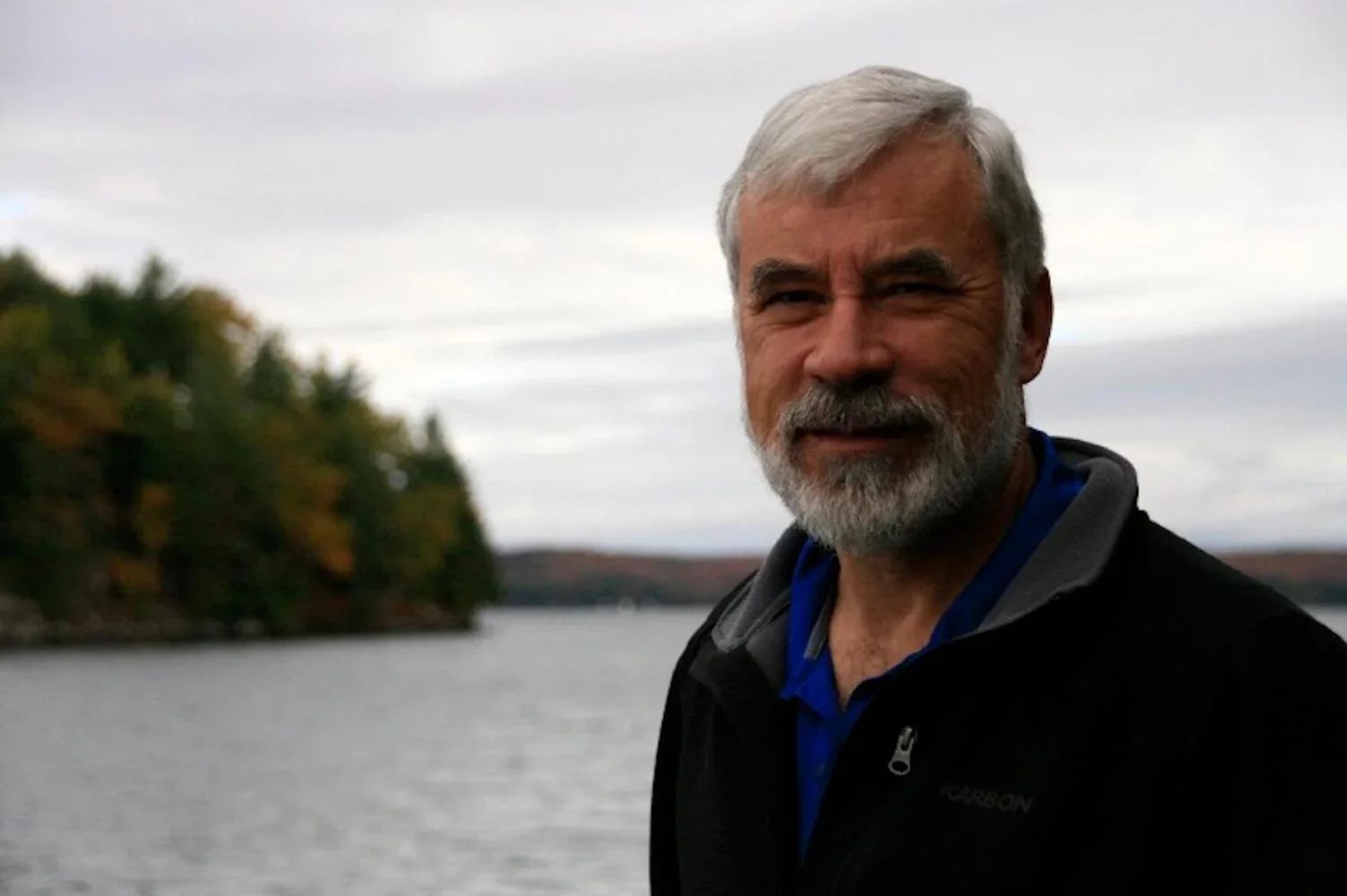
Geoff Ross
This is article No. 40 in the current series, Nurturing Our Watersheds, from Muskoka Watershed Council. Its author is Geoff Ross, long-time member and former chair of Muskoka Watershed Council, and a man who loves his special place in Muskoka. The series is edited by Peter Sale.