
Muskoka Watershed Council: What’s an ecosystem and why should I care?
By Kevin Trimble | December 6, 2025
I made a living doing technical work in the ecological sciences, but one of my, and my colleagues’ toughest challenges has always been explaining to people, including business owners or community leaders, why they should care what an ecosystem is and why every action they take becomes a part of it. Understanding this reality is among society’s greatest imperatives.
Indigenous people had this figured out. From the time that retreating glaciers created our lakes and rivers until European contact spread disease, displacement and war, indigenous people prospered as an intrinsic part of the ecosystem. That’s more than 12,000 years and hundreds of generations. But the rest of us are only just beginning to understand the need to incorporate their ways of thinking into western economies and science.
John Beaucage of the Wasauksing First Nation, who recently received the Order of Canada, told our Muskoka Watershed Advisory Group of an Anishinabek teaching that speaks to the place that human beings hold in creation. He said essentially that all of creation came upon the earth before humans, and that we depend on it completely for our well being; but humans have the unique ability to throw our local environment out of balance, and that ability comes with a responsibility to ensure this never happens. He also said that we must consider how each of our decisions will affect all our relations, which include all other creatures as well as our own descendants seven generations from now.
Richard Wagamese, a well know Ojibwe author, said simply that “we only exist because everything else does”. Put another way, humans only exist because of the ecological support systems we depend on. And humans will only exist as long as those support systems remain stable. Period.
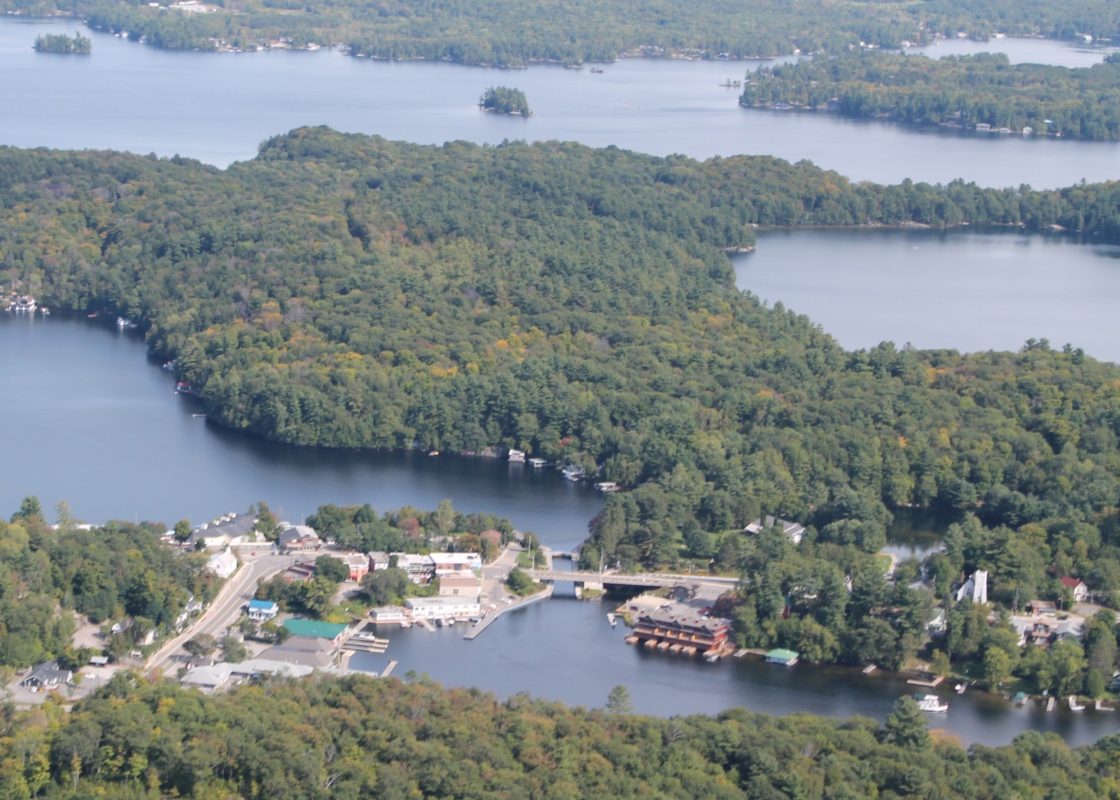
In the Muskoka River watershed ecosystem most of us now understand that our livelihood and well-being are tightly tied to a high quality natural environment. And we are often concerned enough to take some actions to keep our environment healthy. We have good intentions and many success stories undoing mistakes we’ve made, like patching holes in the ozone layer of the atmosphere, banning DDT and cleaning up acid rain. But we’re still making more messes that our grandchildren may or may not be able to clean up. And most attempts by government, business, communities and property owners to minimize impacts still put dents in the overall stability of the ecosystem we depend on.
A stable ecosystem consists of complex processes and interactions between living organisms, from microbes to top predators and other consumers (including us), and the physical environment. Biological communities alter the physical environment and vice versa. Earth’s ecosystems have been constantly changing since life began. Only recently have ecological processes created a delicate mix of conditions suitable for humans. And our ecosystem has been relatively stable since humans settled the post-glacial landscape. But since European colonization, we have abused our responsibility for the ecosystem that John Beaucage described.
We tend to assume and accept that small ecological impacts from our local actions are okay because of the good things we do when and where we can. That assumption extends to how big we grow our population and how many natural resources we remove. The environmental cost of these losses and impacts are easily ignored in the short term.
But we need to realize that those small, local, incremental impacts are melting glaciers We are changing our world faster than our ecosystem can adjust to maintain stable, suitable conditions for us. While we have the ability to critically de-stabilize our ecosystem, we also have the ability to enhance it. We need to address the messy question of how to make every decision and action contribute to ecosystem health, whether in backyards, boardrooms or council chambers.
This is article No.24 in Living Smarter in Muskoka, the current series of articles from Muskoka Watershed Council edited by Dr. Peter Sale. Author of this article is Kevin Trimble, retired aquatic ecologist, Muskoka resident, and who, as Director and a former Chair of MWC works to build better management of our watershed.
First published by MuskokaRegion.com